


Not sure what to do with a bounty of fresh tomatoes? Make roasted tomato sauce! This easy recipe uses a mix of fresh tomatoes, aromatics, and herbs, requires only 10 minutes of hands-on time, and results in a richly flavored sauce that stores well in the freezer.
Want to save this recipe for later?
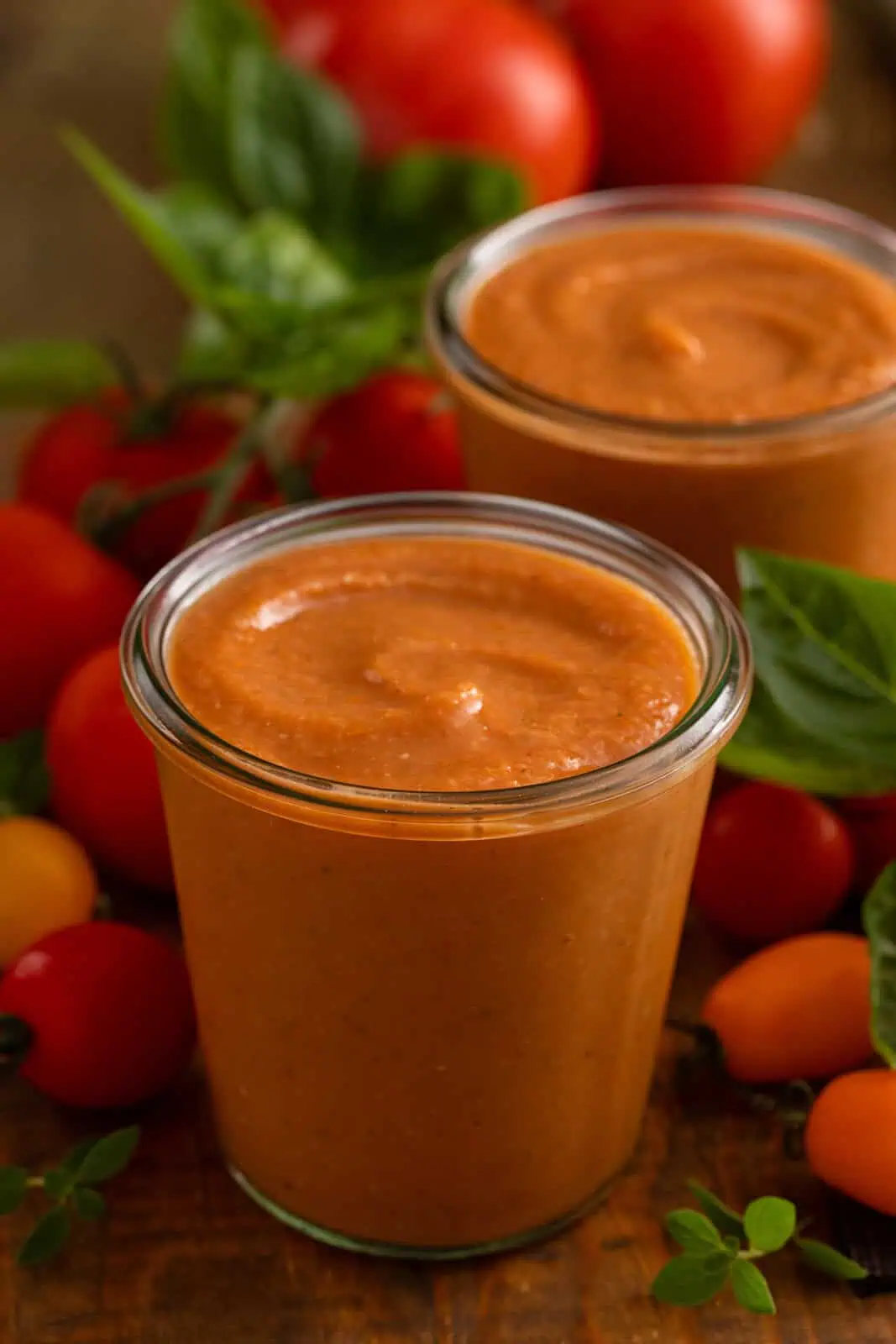
I have been making this roasted tomato sauce every summer for years. It’s our favorite way to make homemade tomato sauce with rich, complex flavors—without hours spent stirring it on the stove.
We’ll make several batches of this sauce throughout the peak of tomato season, store it in the freezer, and enjoy it all fall and winter long.
If you’ve got an excess of tomatoes on your hands, give this sauce recipe a try. All you need are a few simple ingredients, 10 minutes of hands-on time, and 1 hour of roasting time. Trust me, it’s so easy!
Why roast the tomatoes for your tomato sauce?
So why bother with roasting tomatoes for tomato sauce instead of making the sauce on the stovetop?
Aside from removing most of the hands-on time typically required for making homemade tomato sauce, the biggest benefit is in the flavor of the sauce.
Roasting brings out the natural sugars in the tomatoes, deepening the flavor. The caramelization of the sugars adds complexity to the sauce and helps balance the acidity.
If you’ve ever made tomato sauce on the stove, you know that it’s not uncommon for recipes to call for a bit of sugar. This is added to mellow the acidity of the tomatoes. But when you roast the tomatoes first, you don’t need that added sugar; the roasting process takes care of that work for us.
Stephie’s testing notes and tips
- This is a very forgiving recipe. You can use any kind of onion you may have on hand as well as any fresh herbs you like best. I most often use oregano and basil, but rosemary, thyme, and even marjoram are all great options. You could even add a couple of carrots into the mix if you want to sneak in some extra veggies.
- Consider this the perfect way to use past-their-prime tomatoes. I’ve made this recipe with perfectly ripe sauce tomatoes, over-ripe heirloom tomatoes, and everything in between. It turns out great every time.
- Don’t overcrowd the roasting pans. Make sure you have enough room to spread all of the vegetables into an even layer. If they’re too crowded, all they’ll do is steam and you won’t get the beautiful caramelization that we want.
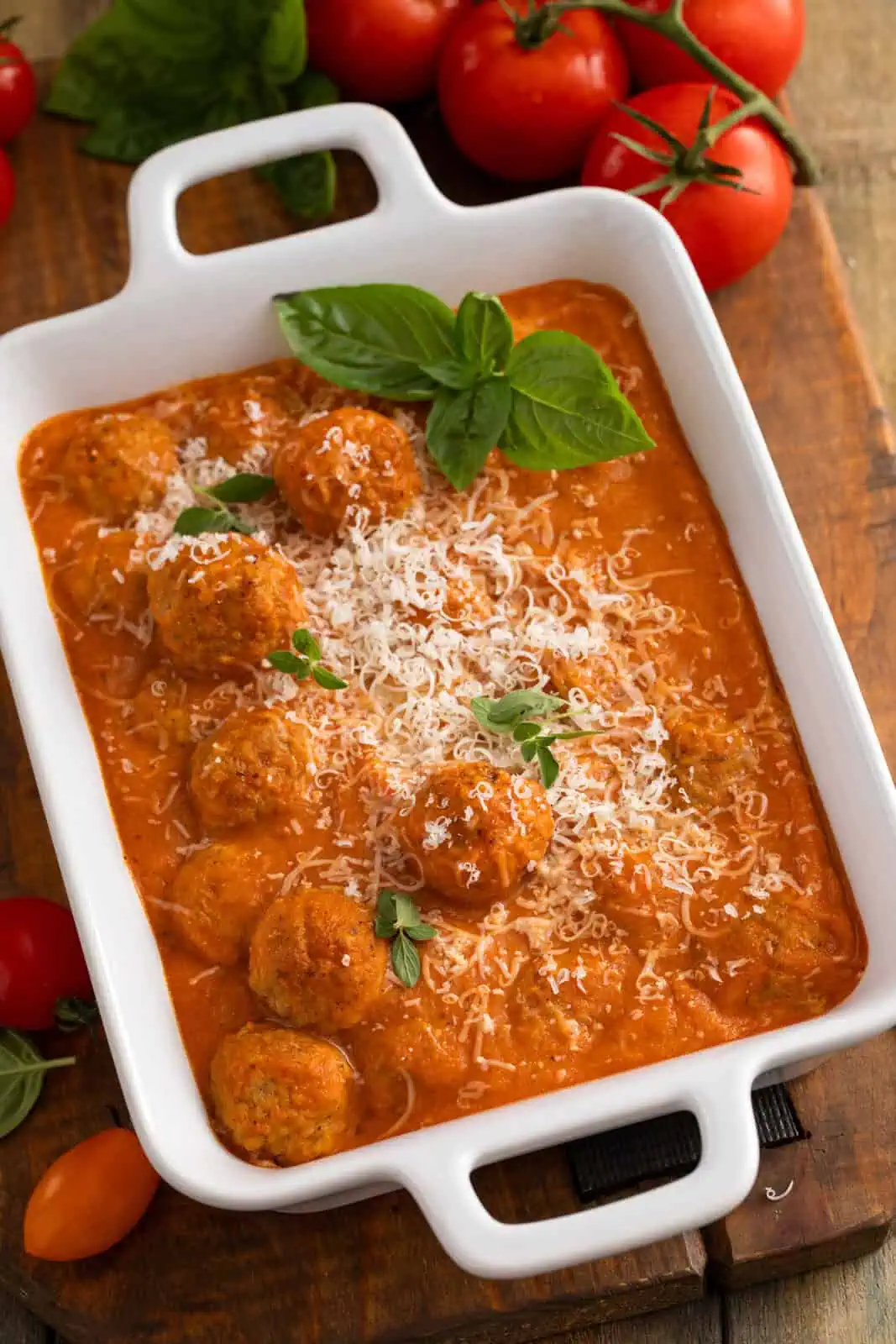
What type of tomatoes should you use?
Remember how this is a very forgiving recipe? That goes for the star of the show, too. You don’t need to be precious about the type of tomatoes you use.
I use whatever I have on hand or whatever is particularly prolific at the farmer’s market that week. This could be heirloom tomatoes, beefsteak tomatoes, roma or plum tomatoes, or sauce (San Marzano variety) tomatoes.
The only tomatoes that I don’t often use for sauce are cherry tomatoes or grape tomatoes, but that is because I usually eat them all before they can become sauce. If you choose to add some to your sauce, just keep an eye on them when they are roasting, as they will roast faster due to the small size. You could also turn them into cherry tomato confit, which is also incredible.
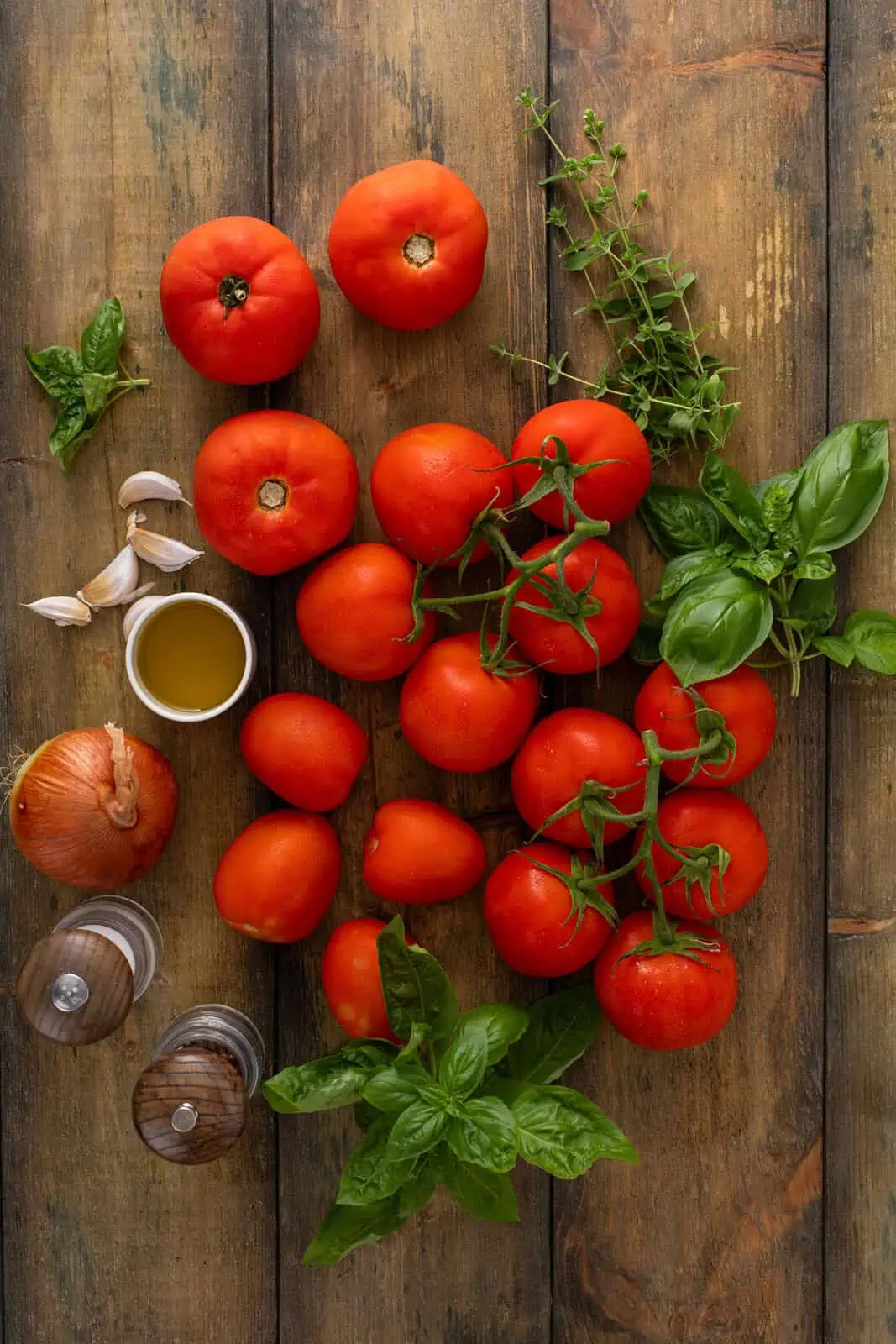
Ingredient notes
For full measurements and step-by-step instructions, scroll down to the printable recipe card.
- Fresh tomatoes: As I noted above, use whatever you have on hand. Some stands at our farmer’s market will offer boxes of tomatoes that are past their prime at a discount. Those tomatoes are perfect for turning into sauce, so it’s worth asking about!
- Onion: I typically use a yellow or white onion. If you have a red onion or even some shallots on hand, those work well too.
- Garlic: I do recommend using fresh, whole garlic gloves. If you don’t have any on hand, you can add some garlic powder along with the salt.
- Olive oil
- Fresh herbs: I usually add oregano and basil, but use what you have on hand. If using dried herbs, use about 1/3 the amount as dried herbs have a stronger flavor than fresh.
- Salt and pepper
How to make roasted tomato sauce
You’ll want to use large, rimmed baking sheets for this recipe. You can also use a couple of roasting pans. Just make sure there is a lip to keep the juices from spilling all over the oven and you have plenty of room for all of the vegetables.
Line the baking sheets with parchment. You can also line them with foil and grease the foil with cooking spray, although some people feel that this gives the roasted tomatoes a bit of a metallic taste.
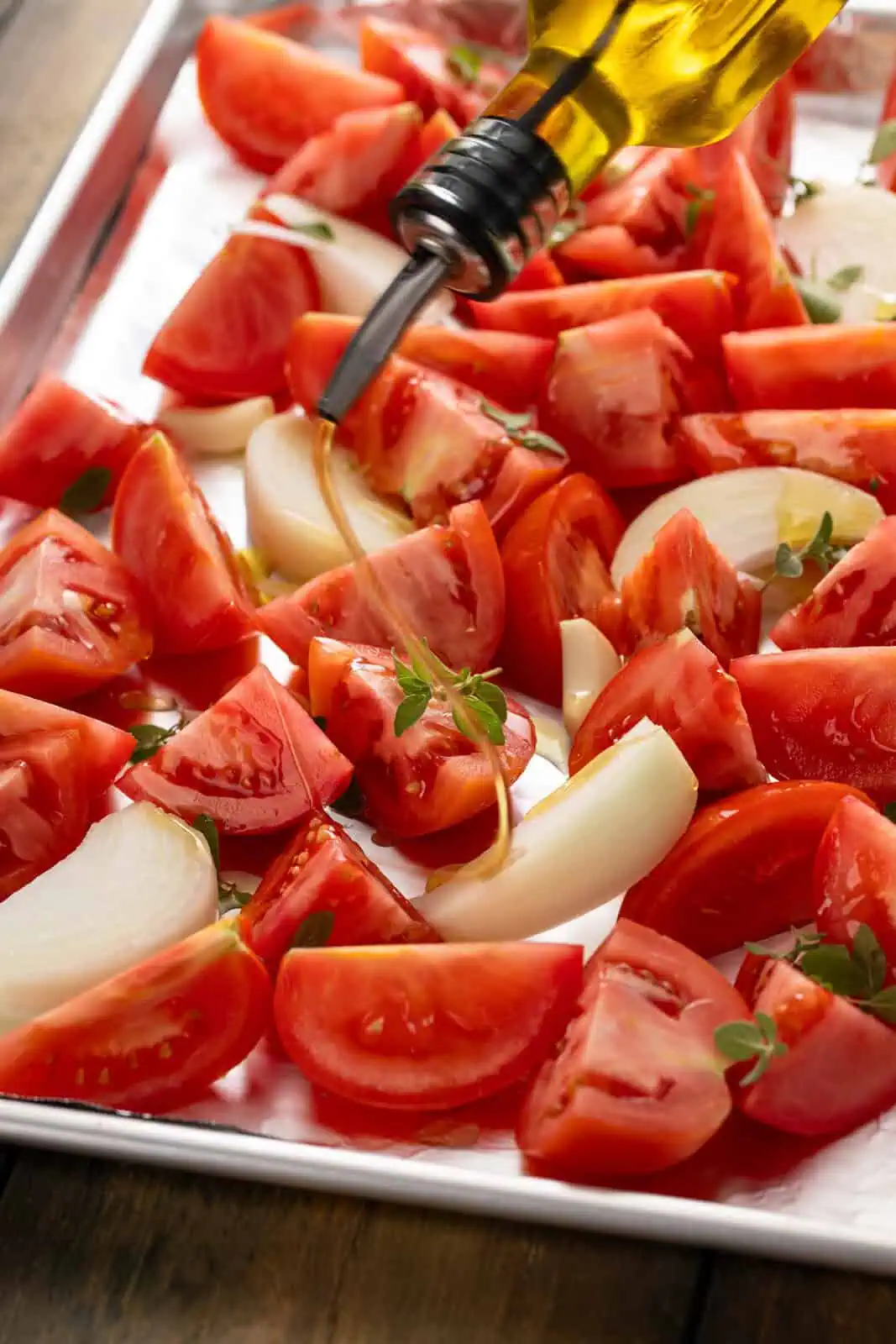
One of the most important things about roasting tomatoes for this sauce is making sure you cut the tomatoes into fairly equal-sized chunks. Depending on the size of your tomatoes, this may mean cutting them into anywhere from 4 to 8 pieces each.
Divide the tomatoes evenly between the prepared sheet pans, making sure they aren’t too crowded.
Peel the onion and cut it into pieces roughly the same size as your tomato pieces. Scatter them with the tomatoes. Peel the garlic cloves (I like to smash them with my knife first) and add them to the pans along with the oregano leaves.

I like to wait until later to add the fresh basil, as the flavor is brighter when it has not been roasted with the other veggies.
Now sprinkle both pans liberally with salt and drizzle evenly with the olive oil.
Place both pans in a 375℉ oven for about 45-60 minutes. If you need to place the pans on separate racks, swap them halfway through so they both roast evenly.
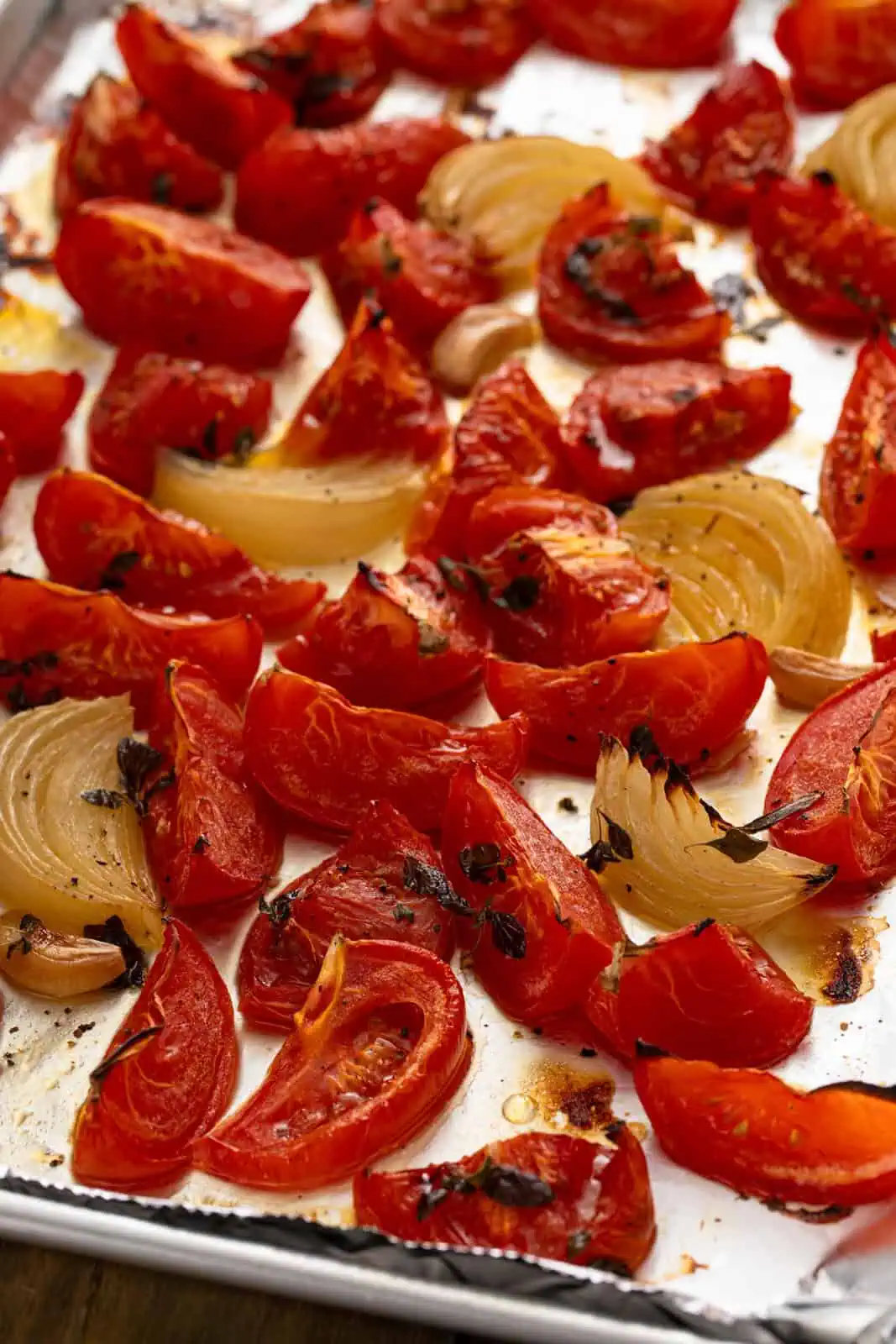
The vegetables are done when the tomatoes and onions are soft, charred in some spots, and the juices from the tomatoes are caramelized. Let the pans cool for a bit before carefully transferring all of the roasted vegetables to a blender or food processor along with the fresh basil.
Carefully blend on high until smooth. If the vegetables are still quite hot, you will need to be extremely careful when blending.
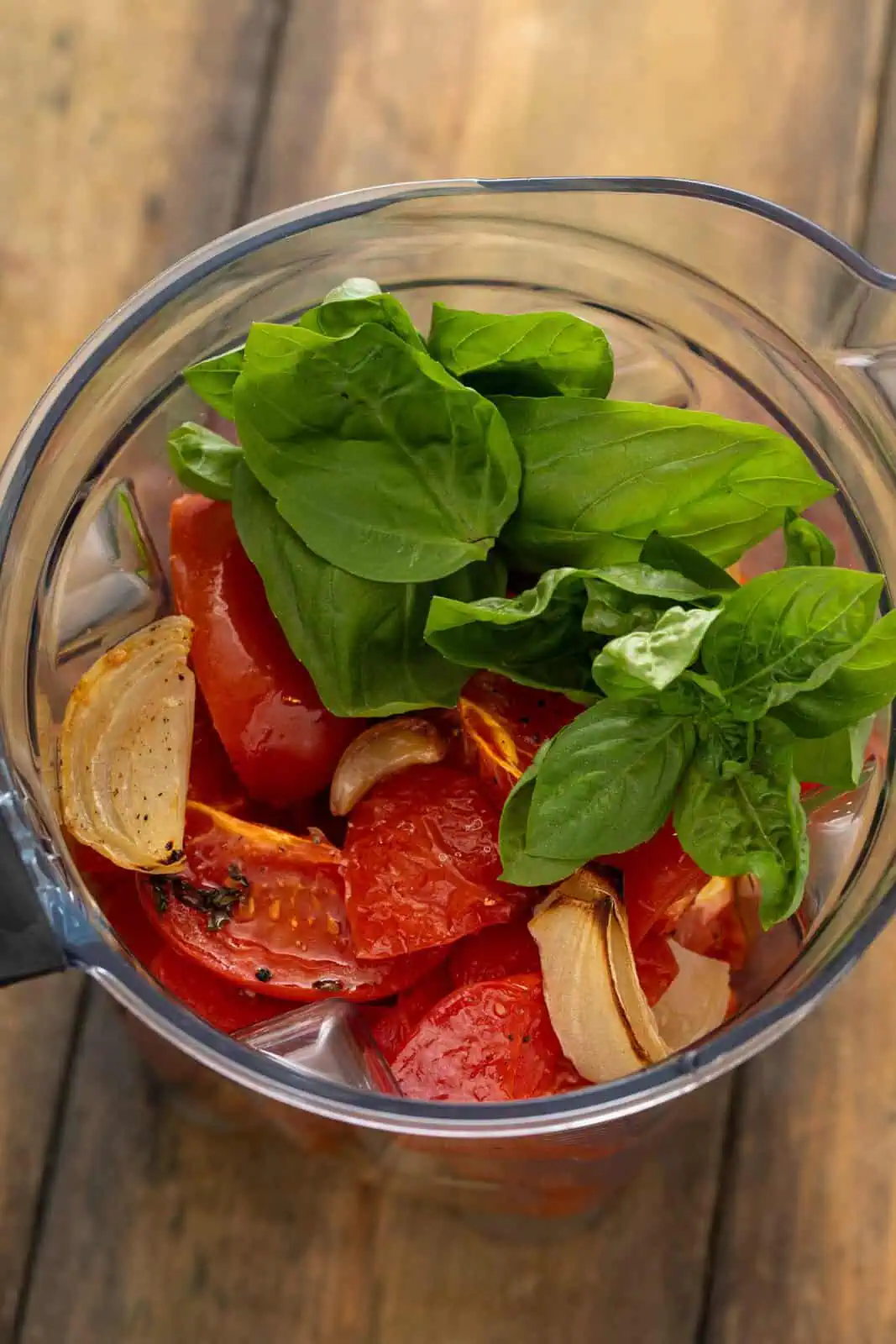
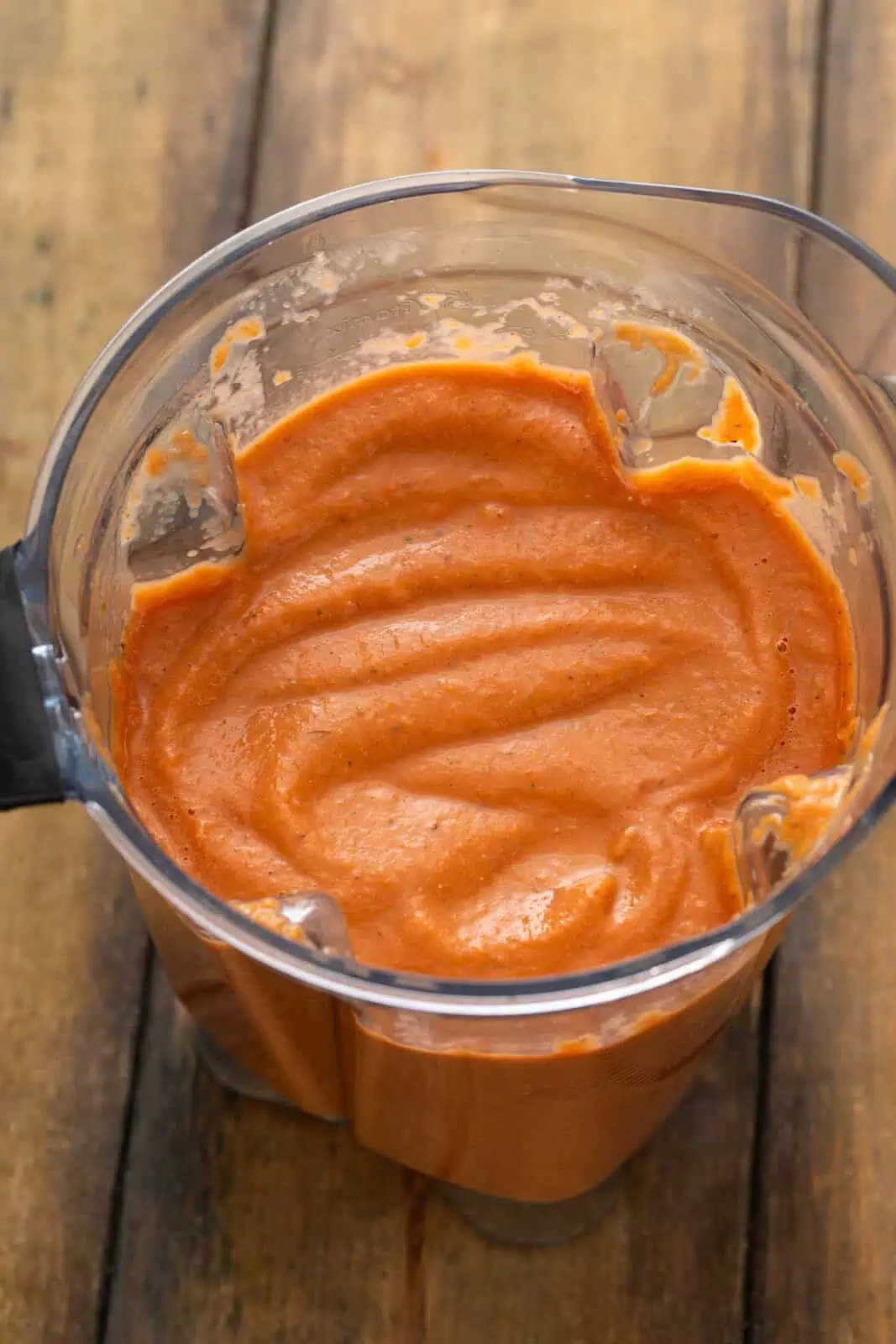
Once the sauce is smooth, give it a taste and season with fresh ground pepper and additional salt as needed. You can even add a few pinches of red pepper flakes if you want to add a bit of heat.
Storage tips
Every summer, I make batches and batches of this sauce to put away for the winter.
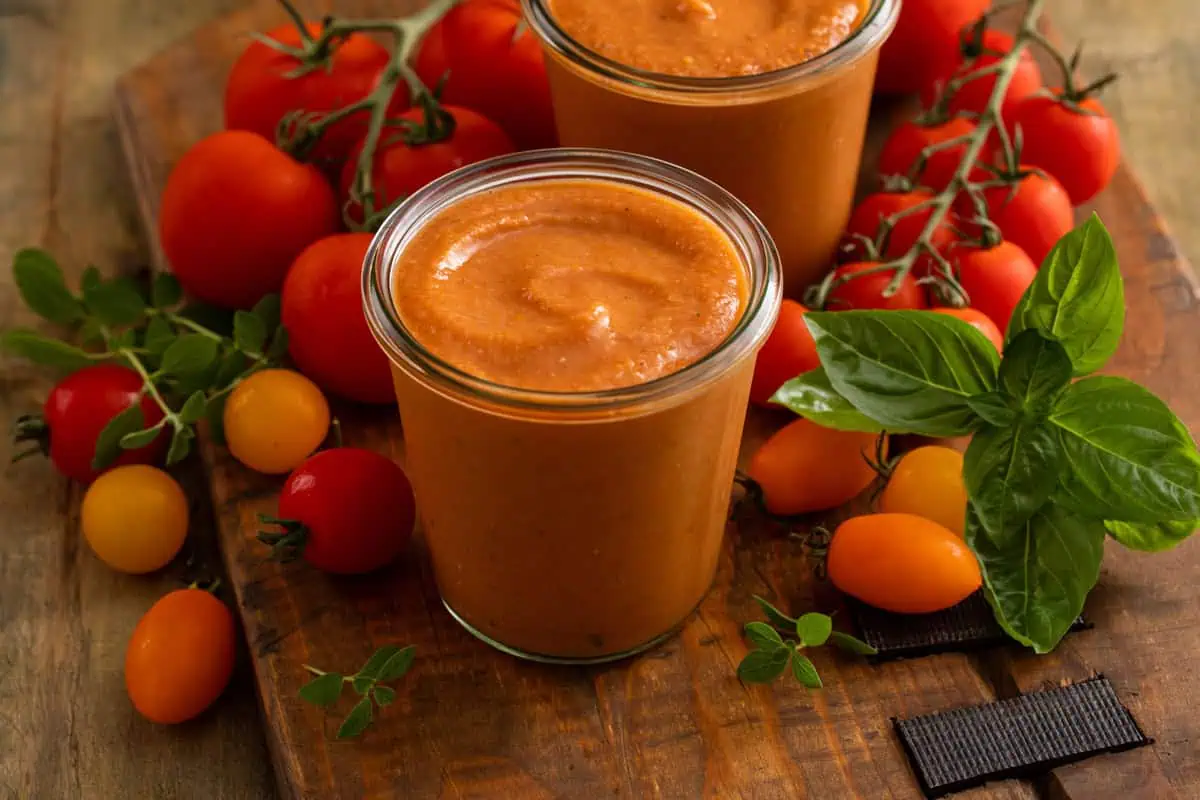
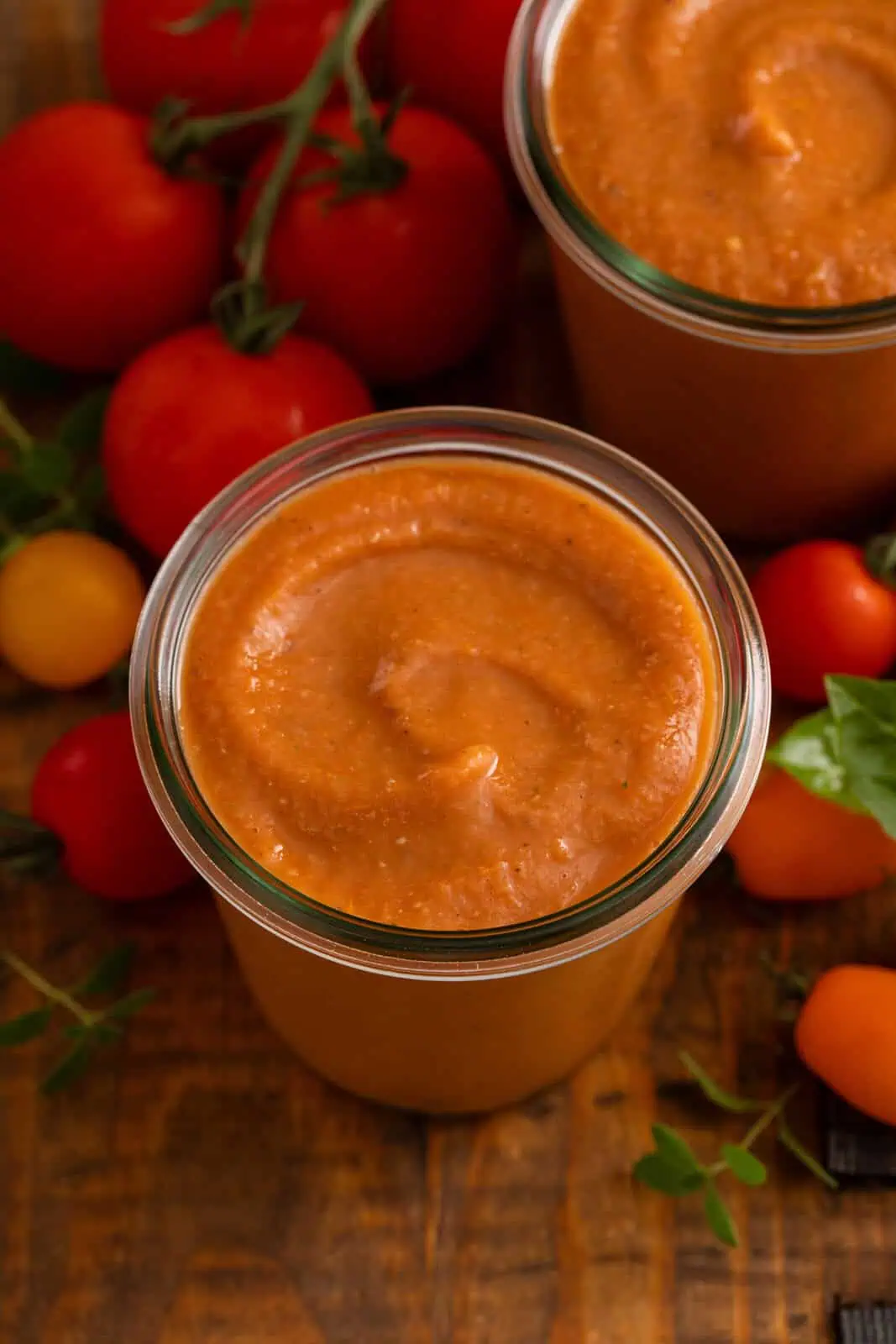
You can store this roasted tomato sauce in airtight containers in the refrigerator for up to a week or in the freezer for several months.
If you don’t have as much space in your freezer, store the sauce in zip-top bags instead of jars. You can lay the bags flat so they take up less space once frozen. Either way, make sure you leave from 1/2 inch to 1-1/2 inches headroom when freezing so your containers don’t burst.
If you want to can this sauce, you will need to make some adjustments since it is a tomato-based recipe. I recommend checking out my friend Megan’s homemade pizza sauce recipe and reviewing her directions for canning that recipe.
Uses and serving suggestions
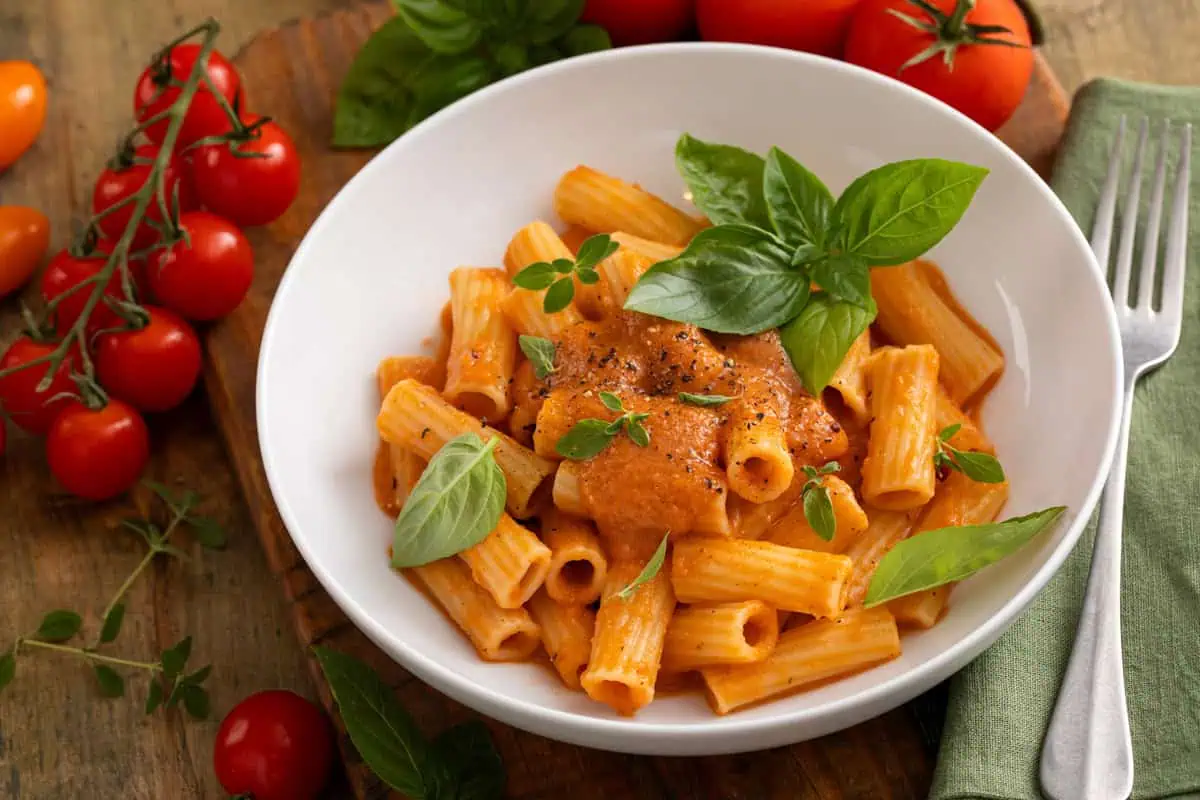
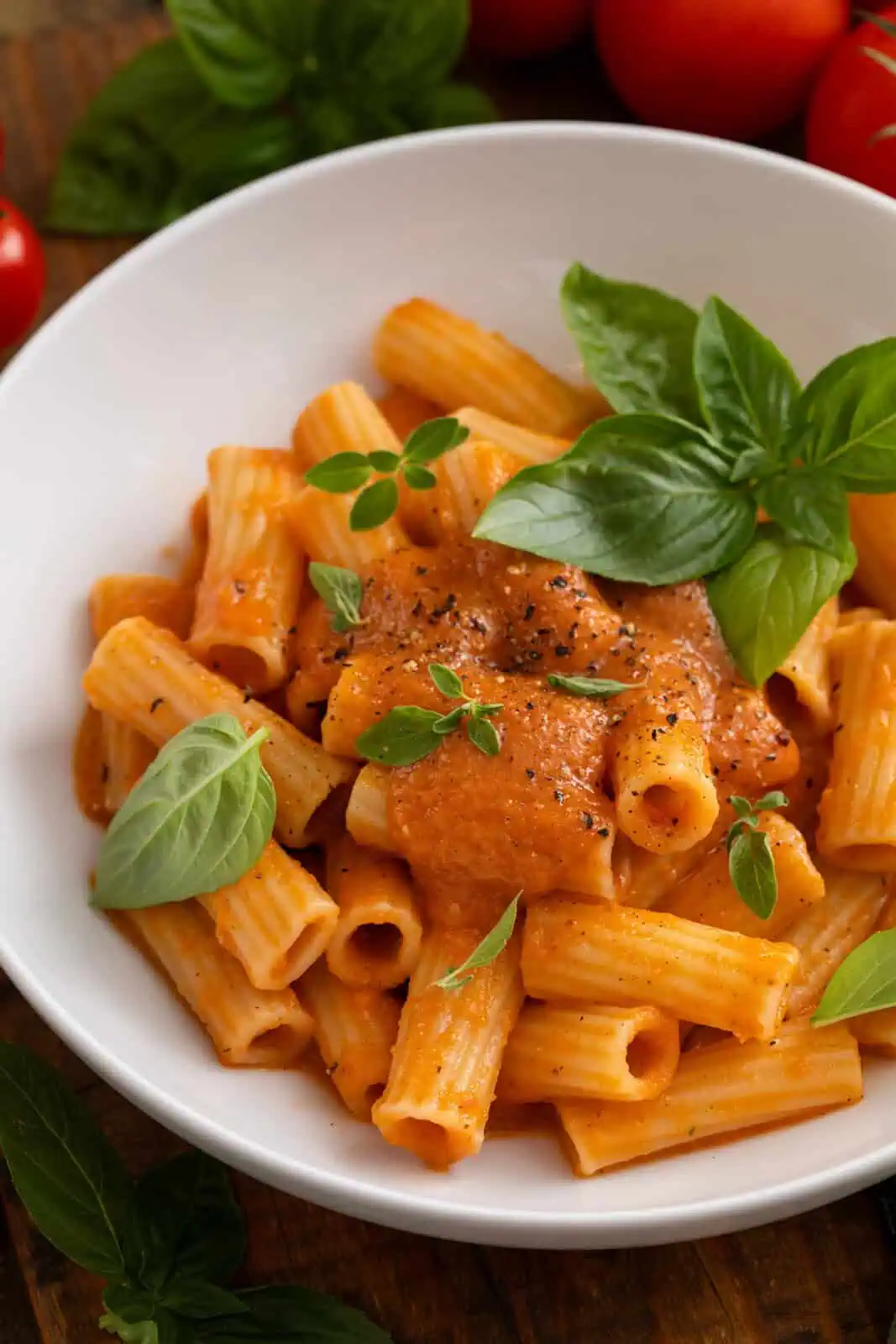
We use our roasted tomato sauce throughout the winter primarily as pasta sauce, especially for spaghetti with classic Italian meatballs or easy baked rigatoni.
We’ve even used this sauce in Homemade Hamburger Helper and slow cooker lasagna soup and let me tell ya…it’s divine.
You could even use it as a pizza sauce or a dipping sauce for pizza sliders or toasted gnocchi or ravioli.
FAQs
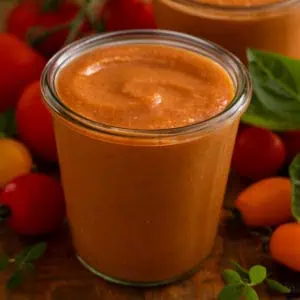
Roasted Tomato Sauce
Equipment
Ingredients
- 5 pounds fresh tomatoes
- 1 medium to large yellow or white onion
- 4 to 5 cloves garlic
- 2 tablespoons fresh oregano leaves
- Fine sea salt or kosher salt to taste
- 3 to 4 tablespoons olive oil
- Black pepper to taste
- ¼ cup basil leaves
Want to save this recipe for later?
Instructions
- Preheat oven to 375℉. Line two large rimmed sheet pans with parchment paper. Alternately, line with foil and grease lightly with cooking spray. Set aside.
- Cut tomatoes into large chunks, anywhere from quarters to eighths, depending on the size of the tomato. Make sure all of the tomato pieces are similar sizes. Divide tomatoes evenly between the prepared baking sheets, making sure they are not too crowded.5 pounds fresh tomatoes
- Peel onion and cut into large chunks similar in size to the tomato pieces. Scatter evenly amongst the tomatoes on the baking sheets. Smash and peel garlic cloves and add to the pans. Scatter oregano leaves evenly over the top of both pans.1 medium to large yellow or white onion, 4 to 5 cloves garlic, 2 tablespoons fresh oregano leaves
- Season both pans liberally with salt and drizzle evenly with olive oil. Roast for 45-60 minutes, or until the tomatoes and onions are charred in places and the juices from the tomatoes are caramelized.Fine sea salt or kosher salt, 3 to 4 tablespoons olive oil
- Allow to cool slightly, then carefully transfer all of the roasted vegetables into a blender, along with the fresh basil. Carefully blend on high until smooth. Season liberally with fresh ground pepper and additional salt as needed.Black pepper, ¼ cup basil leaves
- Store in airtight containers in the refrigerator for up to a week or in the freezer for several months.
Notes
Ingredients
- You can use any fresh tomatoes you have on hand, though I tend to steer clear of cherry/grape tomatoes for this recipe. Plum, beefsteak, sauce (San Marzano variety), or heirloom varieties all work well. This is also a great recipe for using tomatoes that are overripe or past their prime.
- Red onion or shallots can be used in place of the yellow/white onion.
- Try using other herbs you may have on hand, such as rosemary, thyme, or marjoram.
Storage
- Store in airtight containers in the fridge for up to a week or in the freezer for several months.
Yield
- Makes about 2 quarts.
Nutrition

About Stephie
Stephie is the creator of Stephie Cooks, a food blog that focuses on creating memories around the food we share, with family recipes at the site’s heart. Stephie lives in Central Illinois with her husband, daughter, and a menagerie of cats and dogs. When she’s not in the kitchen or at her computer writing, you can usually find her curled up with a book or working on one of her many grandma-esque hobbies. Learn more >